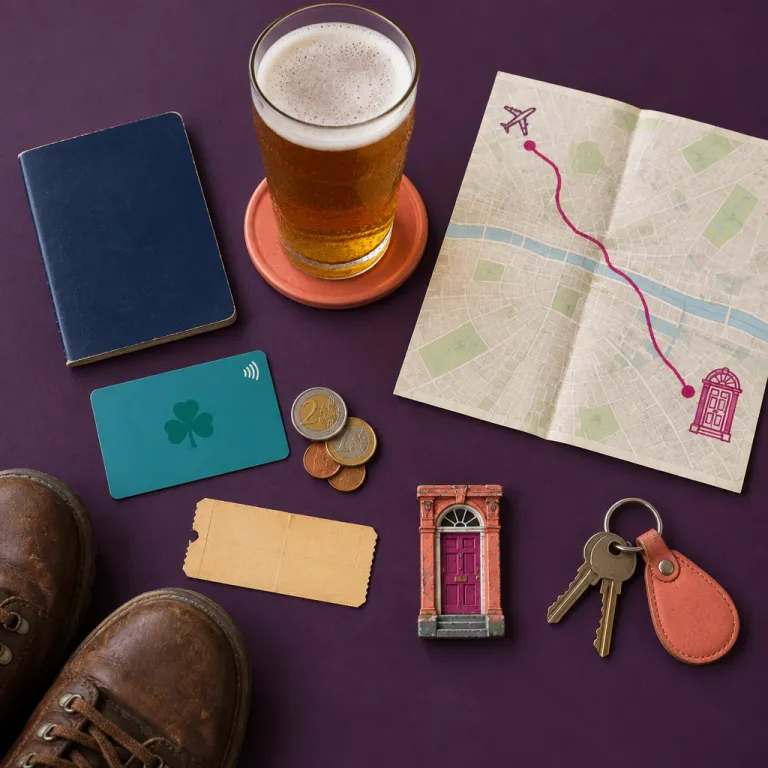
Understanding the Dublin airport to city centre puzzle
Step off the plane at Dublin Airport and the first decision arrives fast. The terminal doors slide open, the air feels cooler, and the question of how to reach the city centre quietly dictates the rhythm of your first hours. Handle this airport–city link well and you are checking into your hotel, not queuing for tickets under harsh strip lighting.
There is no rail line from the airport to Dublin city, so your choice is between bus, coach or taxi. For a short stay in the central Dublin area, the bus is usually the smartest option, while a taxi ride from Dublin Airport makes sense only when you value privacy and door-to-door ease over price. Express coach services sit in the middle, trading a few extra euros for fewer stops, more luggage space and calmer travel.
Think of the wider Dublin Airport campus as its own transport zone, with each terminal feeding different routes. From the main forecourt outside Terminal 1 and Terminal 2, regular Dublin Bus and Bus Éireann services and the faster Dublin Express and Aircoach coaches roll towards O’Connell Street and the quays in minutes, while taxis wait in a disciplined rank just outside. Your aim is simple: move from arrivals to your chosen option without dithering, using the overhead signs to follow the coloured symbols for bus, coach or taxi.
Bus, coach or taxi: choosing the right first move
For most visitors, the regular Dublin Bus network is the cheapest and most flexible bridge between airport and city. Routes such as the number 16 bus Dublin service run from the airport bus stops to the city centre roughly every 10 to 20 minutes, with adult fares starting at around 2.00 euros when you tap a Leap Card. The journey takes longer than the express services, but it drops you into the real Dublin city rhythm rather than a sealed tourist bubble, with stops in residential streets as well as the main thoroughfares.
Coach-style options such as Aircoach and Dublin Express cost more than standard buses but buy you speed and predictability. Aircoach Dublin and the Dublin Express services run direct routes from each terminal to central streets like O’Connell Street, Aston Quay and Kildare Street, with underfloor luggage holds, Wi‑Fi and clear digital displays. These express services are ideal when you are jet lagged, carrying heavy bags, need step-free boarding or are heading straight to a hotel near the river and want a simple, one-seat ride.
A taxi Dublin ride from the official airport rank is the most expensive option but still reasonable for a group. Expect around 30 to 40 euros to most city centre hotels, depending on traffic, time of day and exact zone, with the ride usually taking 25 to 40 minutes. If you land late at night, are staying beyond the canals, have mobility issues or simply want guaranteed door-to-door comfort, this option can justify its cost in saved effort and reduced stress.
To plan how you will move beyond that first ride, study a practical guide to getting around Dublin from your hotel before you fly. Knowing how buses, DART and Luas connect your chosen street to the airport routes turns a simple transfer into a joined-up itinerary. It also helps you decide whether to prioritise a hotel near a tram stop, a frequent bus corridor or the quieter Georgian lanes that still sit within a short walk of the main public transport spines.
Leap Card, zones and why walking beats passes for short stays
The small green Leap Card is the quiet hero of Dublin public transport, especially when you are shuttling between airport and city. This reusable smart card works on Dublin Bus, Bus Éireann within the city, the Luas tram and the coastal DART trains, capping your daily spend on buses and Luas at about 8.50 euros for adults. For a two or three night stay, that daily cap usually beats the cost of multi-day passes while keeping your options open and your fares transparent.
Think of the city as a set of overlapping transport rings rather than rigid lines. The Dublin Airport area sits outside the central zone, but once you reach the city centre your Leap Card lets you hop between zones without worrying about individual tickets. You can buy or top up a Leap Card at the Spar and WHSmith outlets in the arrivals halls or at the dedicated ticket machines beside the main bus stops, then use it for DART single fares that typically run between 2.00 and 4.50 euros depending on zones, while the Luas has an on-time record that makes quick cross-town hops feel reliable.
Many first-timers waste both money and minutes by buying paper singles for every bus or tram. With a Leap Card you simply tap on when boarding a Dublin Bus service, or tap the platform readers for Luas and DART, then walk the rest inside the canals. That combination of walking and short hops is usually faster than trying to thread every journey through a pre-paid pass, and it keeps you above ground, learning the street names and landmarks as you go.
If you are still choosing where to stay, look at how Dublin public transport can shape your hotel choice. A hotel near a Luas stop, a frequent airport bus route or a DART station can save you more than any marginal room discount. For many guests, being able to walk from O’Connell Street or Dame Street back to their room in ten minutes is worth far more than a slightly larger bed or a marginally cheaper nightly rate.
Building your mental map: from terminals to streets and coasts
Once you have solved the Dublin Airport to city centre question, the rest of the map falls into place. Picture the canals as a soft boundary: inside them, you mostly walk, while beyond them you lean on buses, Luas and DART. The airport bus or coach simply delivers you to the edge of this walkable core, usually around O’Connell Street, Eden Quay or College Green, where you can orient yourself before moving on.
DART is your coastal spine, running from Howth and Malahide in the north to Greystones in the south, with sea views and compact stations close to harbours and beaches. Luas Green and Red lines cross the core of Dublin city, linking suburbs and key streets without ever touching the airport terminal zone, but connecting easily with bus corridors that do. Public transport here is not about grand gestures but about stitching together short, efficient journeys that make the city feel smaller than it looks on the map.
Within the central Dublin area, most hotels sit within a 10 to 20 minute walk of O’Connell Street, Grafton Street or the river. From these anchors, you can reach the trad sessions of Capel Street, the Georgian calm of Merrion Square or the restaurants of Portobello on foot. Buses and trams then extend your reach to the Phoenix Park, the Docklands or the coastal villages without effort, with frequent services and clear stop names announced on board.
To understand how location shapes your days, study a guide to staying near Dublin’s main shopping streets before you book. It will help you weigh a room near O’Connell Street against one closer to quieter residential lanes. The right street can turn every return from the airport–city link into a short, pleasant stroll rather than a late-night puzzle involving multiple changes and long walks at the end.
Your first two hours: from arrivals hall to first pint
Imagine the clock starting the moment you clear passport control at Dublin Airport. You step into the arrivals hall, follow the clear signs for bus and coach services Dublin, and ignore any urge to linger in the terminal shops. Within minutes you are outside, reading the boards for Aircoach, Dublin Express and regular Dublin Bus routes, with staff and ticket machines nearby if you need help buying or topping up a Leap Card.
If your hotel sits near O’Connell Street or the north quays, choose a Dublin Express or Aircoach Dublin service that lists your stop and pay with card or pre-booked tickets. For a tighter budget, walk to the airport bus stands and board a Bus Éireann or Dublin Bus service heading towards the Dublin city core, tapping your Leap Card as you enter and stowing luggage in the racks. Either way, you are now watching the suburbs slide past rather than staring at a terminal wall, and you can follow your progress on the in-bus displays or a maps app.
Once you reach the city centre, walk straight to your hotel, drop your bags and resist the temptation to collapse. Step back out onto the street, feel the scale of the city, and let your feet set the pace. Within a short walk you will find a quiet pub where the first pint tastes like a small victory and the noise of the airport already feels distant.
From here, the mental map is simple: feet inside the canals, Luas across the core, DART for the coast and buses for the gaps. You have turned the airport–city transfer from a chore into a clean first chapter. Not the postcard, but the pint that stays warm in your hand while buses and trams glide past outside.
FAQ
How long does it take to get from Dublin Airport to the city centre by bus?
Most regular Dublin Bus and Bus Éireann routes from Dublin Airport to the city centre take between 35 and 55 minutes, depending on traffic and the exact route. Express services such as Dublin Express and Aircoach usually complete the same airport–city journey in about 25 to 40 minutes. Travel times are generally longer during peak commuter hours on weekdays and can be quicker late in the evening or early in the morning.
Is a taxi from Dublin Airport to central Dublin worth the cost?
A taxi from Dublin Airport to central Dublin typically costs between 30 and 40 euros, with the ride taking around 25 to 40 minutes. For solo travellers on a budget, buses or express coaches are usually better value than a taxi Dublin ride. For couples, families, travellers with large luggage or late-night arrivals, the door-to-door convenience and step-free access can justify the higher fare.
Should I buy a Leap Card for a short stay in Dublin?
A Leap Card is usually worthwhile even for a two or three night stay, especially if you are using buses, Luas or DART more than twice a day. The daily cap on bus and Luas fares keeps your costs predictable and often cheaper than paper tickets. It also saves time at stops, as you simply tap on rather than queue for tickets, and you can top up at most convenience stores, Luas stops and DART stations.
Which bus or coach should I take if my hotel is near O’Connell Street?
If your hotel is near O’Connell Street, look for Dublin Express or Aircoach services that list O’Connell Street, Cathal Brugha Street or nearby stops on their route boards. Several regular Dublin Bus routes also serve this corridor, but they make more stops and take longer than express services. Check your hotel address and match it to the closest named stop before you board, using the stop codes on the poles or the operator’s journey planner.
Is Dublin city centre walkable once I arrive from the airport?
Dublin city centre is compact and highly walkable, especially inside the canals. Most central hotels sit within a 10 to 20 minute walk of key streets such as O’Connell Street, Grafton Street and Dame Street. Walking combined with occasional short hops on Luas or buses is usually the most efficient way to explore, and it keeps your sense of direction sharp for the journey back to the airport.